Archive for the ‘Cool Stuff’ Category

Maps in Greater Detail

Monday, March 20th, 2006

Wired has a good article out today on how the next-generation of commercial imaging satellites is going to change, er, the way we view the world– or at least the details of our view:

Critics of overhead imagery services like Google Earth and Microsoft Virtual Earth generally fall into two categories: government agencies who say the services show too much, and users who lament they can’t see more.

As the next generation of commercial imaging satellites moves closer to launch, the first camp may be out of luck.

Forthcoming features such as enhanced zoom capabilities, higher-resolution views and faster updates of stock imagery will reveal far more detail of Earth’s surface than anything visible on a computer screen today. While satellite imagery won’t be real-time, or capable of distinguishing individuals, it will be good enough to pinpoint ground-level details too blurry to identify using today’s technology.

"We’re just starting," said Matthew M. O’Connell, CEO of GeoEye (formerly Orbimage), which plans to launch a satellite in early 2007 that can show images of objects as small as 1.3 feet across. "At that resolution, we can literally count the manhole covers in Manhattan."

Just a few years ago, the idea of zooming in from a PC screen to any point on Earth would have seemed like the stuff of fantasy. Now that it’s reality, satellite and aerial mapping applications are drawing millions of addicted users. Hardly a week goes by without news of some strange or scandalous finding: Last week amateur astronomer Emilio González of Spain used Google Earth to find what might be a previously unknown impact crater in Chad.


Read the whole story here


EchoStar, DirecTV Possible Partners

Thursday, March 16th, 2006

Joyzelle Davis reports in the Rocky Mountain News:

EchoStar Communications’ Chief Executive Charlie Ergen gave the strongest indication yet that the satellite-television provider would team with larger rival DirecTV to establish a broadband service.

DirecTV, whose controlling shareholder is Rupert Murdoch’s News Corp., is working on technology that could allow it to offer services including phone and wireless high-speed Internet to homes and mobile devices. That would give satellite-TV providers a way to counter cable companies’ bundle of video, high-speed Internet and phone service….

A partnership would allow EchoStar to split the "excessive" costs of building the network and help craft standards for the industry, Ergen said…

If such a partnership were to occur, it would mark the first strategic alliance between the companies that sought to merge four years ago.

 Read more about the plan here.

Google Goes to Mars

Monday, March 13th, 2006

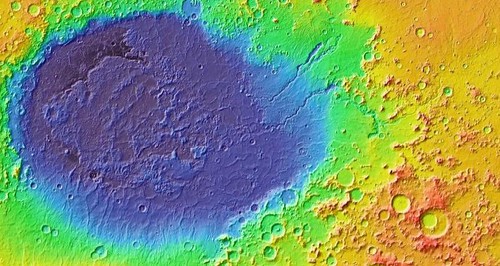
Having already been to the the moon, Google goes to Mars and takes us there with Google Mars.

 Google Mars

Besides looking at the pretty pictures via the elevation map, you can check out the "visible" and "infrared" views, as well as the mountains, ridges, plains and  craters of the red planet, as tagged by Google. And clicking on the stories link will lead you to some background information on various sites, like the Bacolor Crater.  

Via Warping it up!

Technorati Profile

Wanna Buy a Space Shuttle?

Monday, March 13th, 2006

Well, you’re too late and about $98,000 short if — like most of us — you don’t happen to have that kind of change lying around. But if you had it to spare and had happened across a particular Ebay posting over the weekend, you could have bought a Soviet Space Shuttle

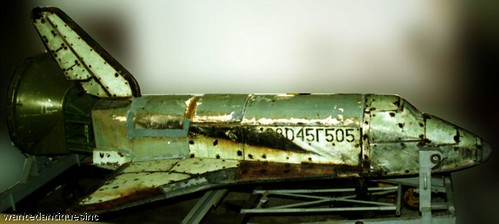
 Soviet Shuttle

OK, OK. So it’s not an actual space shuttle. It’s a 1/8 model that was used in various flight tests for the Soviet’s Buran space shuttle.

 The BOR-5 is a 1400 kg exact 1/8 scale model of the Soviet space shuttle Buran. The BOR-5 is 15’6" Long (17′ w/trailer) X 9’10" Wide (wingtip to wingtip) X 5’10" Tall (8’10" Tall on trailer). It was used to validate the aero-dynamic characteristics of the Buran at hypersonic speeds, between 1983 and 1988. The BOR-5 was launched on probably five sub-orbital trajectories from Kapustin Yar, in the direction of Lake Balkhash, using SL-8 (Cosmos) rockets (Russian designation: K65M-RB5). BOR is the abbreviation for Bezpilotnyy Orbitalnyy Raketoplan (Unmanned Orbital Rocketplane).

BOR-5 flights tested (amoung other things) carbon-based and quartz fiber heat-shield material paving the way for the Buran Shuttle. Russian sources are contradictory as to the number of BOR-5 flights. An except from one report reads: " … At an approximate altitude of 110-120 km height, the Cosmos booster pitched down, driving at full thrust for several minutes, accelerated the model to Mach 18.5 at 45 degrees, before separation. The craft landed using a parachute landing system after a flight of 2000 km.

 But those are just details, really. How cool would it be to start conversations with, "So, you know, I own a space shuttle"? If you happen to have $25,000 to spare between now and April you still have shot at an original NASA space shuttle prototype. Sure it’s only .008 scale, but it’s still a space shuttle, right? Anyway, if that’s too big of a hit to the wallet, you can always bid on about a ton of other space memorabilia.

Via Gizmodo and Random Good Stuff.

GPS for Lost Pets

Tuesday, March 7th, 2006

Here’s a use for satellites I hadn’t thought of, but wish I had. No matter where you live, chances are you’ve seen "lost pet" signs stapled to telephone poles, stapled to streetlights, or tacked to grocery store bulletin boards. I always wondered if those signs really helped people find pets who’ve been struck with wanderlust. My guess is that it’s probably hit-or-miss. Via Gizmodo comes news of Global Pet Finder, which uses GPS and 2-way wireless technology to help customers find their lost pets. Their customer testimonials don’t mention any lost pets that have been found, but some owners have gotten pet location alerts via SMS, so my guess it that it’s probably more effective than posting signs all over town.

People Build the Darndest Things

Tuesday, March 7th, 2006

As someone who finds it challenging to put together my three-year-old son’s toys, I’m rather in awe people who can build stuff — from a simple birdhouse to space-bound rockets and satellites. Lately, I’ve noticed people of all ages taking dreams and ideas from mere ideas on paper to reality. In particular, I’m rather in awe of some Philladelphia high school students who built a hybrid car that runs on soybeans.

 
A car that can go from zero to 60 in four seconds and get more than 50 miles to the gallon would be enough to pique any driver’s interest. So who do we have to thank for it. Ford? GM? Toyota? No — just Victor, David, Cheeseborough, Bruce, and Kosi, five kids from the auto shop program at West Philadelphia High School

The five kids, along with a handful of schoolmates, built the soybean-fueled car as an after-school project. It took them more than a year — rummaging for parts, configuring wires and learning as they went. As teacher Simon Hauger notes, these kids weren’t exactly the cream of the academic crop.

“We have a number of high school dropouts,” he says. “We have a number that have been removed for disciplinary reasons and they end up with us.”

…”If you give kids that have been stereotyped as not being able to do anything an opportunity to do something great, they’ll step up,” he says.

The high school inventors have more than earned their “Fab Five” moniker, but they’re not the only ones building some pretty amazing things. Just in the past week, Make Magazine has featured an update on a Rube Goldberg contest at Purdue University, and a Mexican grandfather who builds his own rockets. I f you’re inclined to try your own hand at this, you can check their post on making water rockets, or visit Dirk’s Rocket Dungeon and check out some old rocket plans for reference.

As for me, I’ll stick to putting together my kid’s toys.  That’s challenge enough for me.

Satellites Track Climate Change

Thursday, March 2nd, 2006

Back in March of 2002, twin satellites launched called GRACE (short for Gravity Recovery and Climate Experiment) were launched by NASA to make detailed measurements of Earth’s gravity field and to the Earth’s natural systems.
Today, MSNBC reports that new data from the satellites reveal that global warming is causing ice loss in Antartica: 


 Joining the growing list of places on this planet that are melting, Antarctica is losing about 36 cubic miles (150 cubic kilometers) of ice every year, scientists reported Thursday.

For comparison, Los Angeles consumes roughly 1 cubic mile of fresh water a year.

The south polar region holds 90 percent of Earth’s ice and 70 percent of the total fresh water on the planet, so any significant pace of melting there is important and could contribute to an already rising sea….

"This is the first study to indicate the total mass balance of the Antarctic ice sheet is in significant decline," said Isabella Velicogna of the University of Colorado at Boulder.

More information on GRACE can be found here


Scenes from a Universe

Tuesday, February 28th, 2006

Gamma Ray BurstUniverse Today has a couple of posts up featuring some fascinting satellite imagery, and even a link to some pretty cool imagination. One features some images of Jupiter, Neptune and Uranus from NASA Astrobiology, while the other concerns a cosmic explosion seen by NASA’s Swift satellite

The Swift satellite, whose mission control center is in State College, has detected a cosmic explosion that has sent scientists around the world scrambling to telescopes to document this startling event. Gamma-ray radiation from the source, detected on 18 February and lasting about half an hour, appears to be a precursor to a supernova, which is the death throes of a star much more massive than the Sun. "The observations indicate that this is an incredibly rare glimpse of an initial gamma-ray burst at the beginning of a supernova," said Peter Brown, a Penn State graduate student and a member of the Swift science team.

The Penn State release also links to a pretty cool collapsing star animation, collapsing stars being one of the "leading contenders" for causing gamma ray bursts like the one Swift detected. Also check out the link to NASA’s Goddard Space Center for multimedia from Goddard TV

Mars Orbiter Ready for Penetration

Monday, February 27th, 2006

NASA engineers are preparing for the Mars Reconnaissance Orbiter to make its risky approach to the planet on March 10. The agency has a 65 per cent success rate at getting probes to orbit Mars, compared to 80 per cent for successful landings on its surface.

As it approaches the planet, controllers on Earth anticipate there will be a signal from the spacecraft indicating that a 27-minute engine burn will slow it down and let martian gravity capture it.h

Why Not a Satellite Watch?

Monday, February 27th, 2006

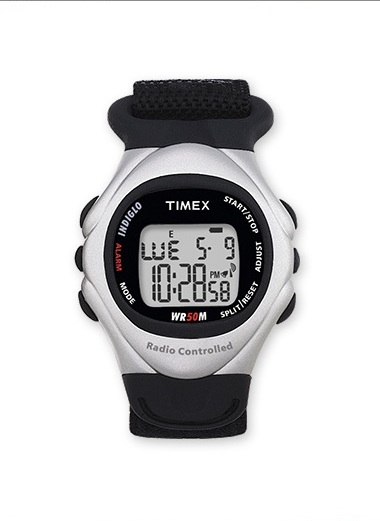
Radio WatchMy watch died this weekend. So I ended up shopping for one this weekend, because I have to have watch. It’s not that I’m terribly punctual or anything. I basically need a watch to tell me how long I can procrastinate, down to the second, before I have to get moving towards where ever I’m supposed to go or get started on whatever I’m supposed to do. Maybe I’m a bit behind on watchmaking technology, but I was surprised to find the watch of my dreams, and to find myself dreaming of one even better.

I was standing in front of the plexi-glass display case perusing the digital models, because an analog watch makes means I have to figure out the time whereas a digital watch just tells me the time. This is important because my watches tend to run up to 15 minutes fast or slow, which means I still have to figure out the time, but a digital display makes it easier to do the math. It was then that I saw a wonder I didn’t know existed: a self-setting watch

Once I got it home and unfolded the instructions, I learned that my "radio controlled" watch is works on Coordinated Universal Time (UTC). Every day at around 1:00 am, it tunes in to a radio signal from Fort Collins, CO, synchronizes and then converts UTC into local time.

So, now I’m thinking that it would be even better if there was a watch that changed time zones when I travel. Like I said before, I usually forget how to set my watch, so changing time zones can be a pain. So, why not a satellite watch that functioned the same way as the radio watch, but that also synched itself whenever I entered a new time zone? Has this been done?  Can this be done?  If so, it would certain make my life easier.